Rack-Aware Sizing Tool
Back to Standard CalculatorRack-Aware Sizing
This calculator assumes rack-aware redundancy. The requested resources (CPU cores, memory, storage) are guaranteed to be available even when one rack fails. For example, if you request 64 cores, the cluster is sized to maintain 64 cores of capacity across all nodes in a single rack.
Sizing Method
Define Your Requirements
Requirement Type
All other hardware specs will be automatically determined by the sizing engine
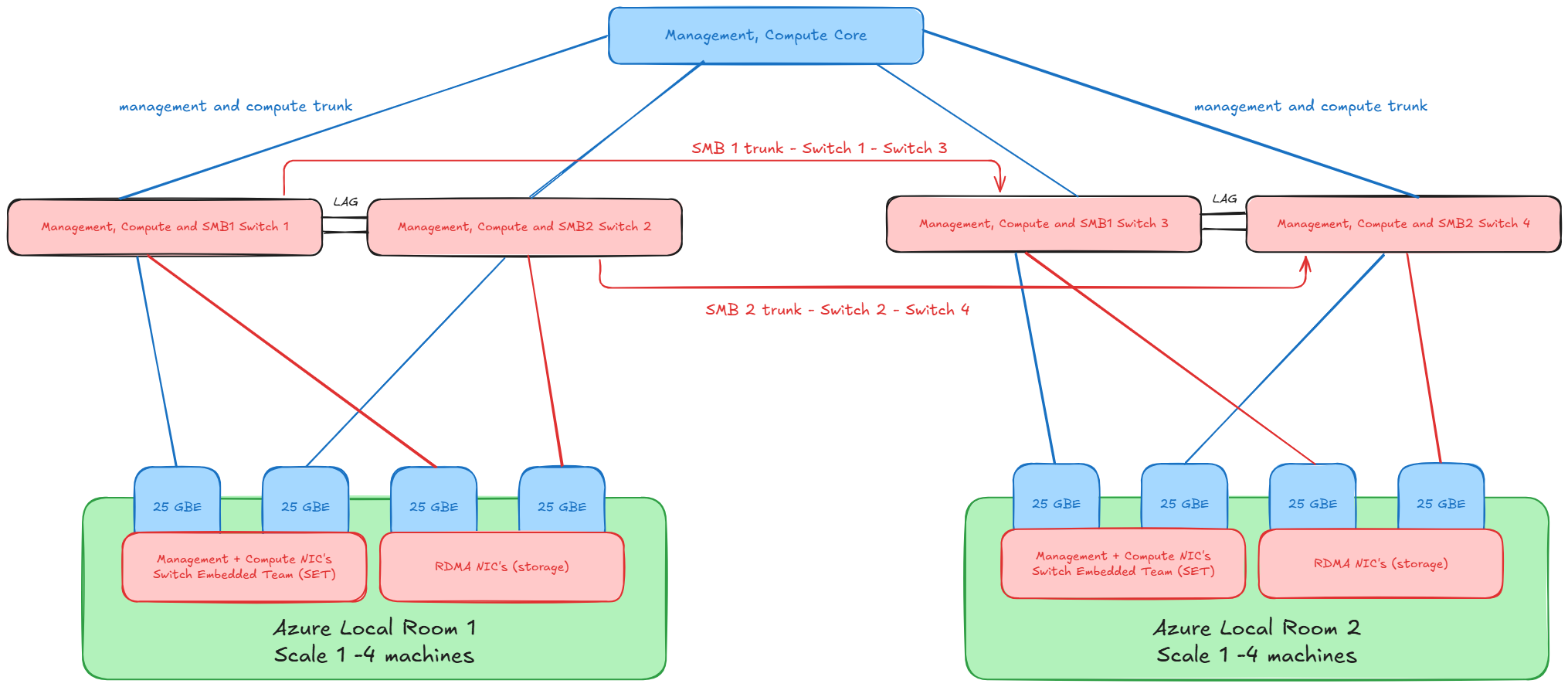
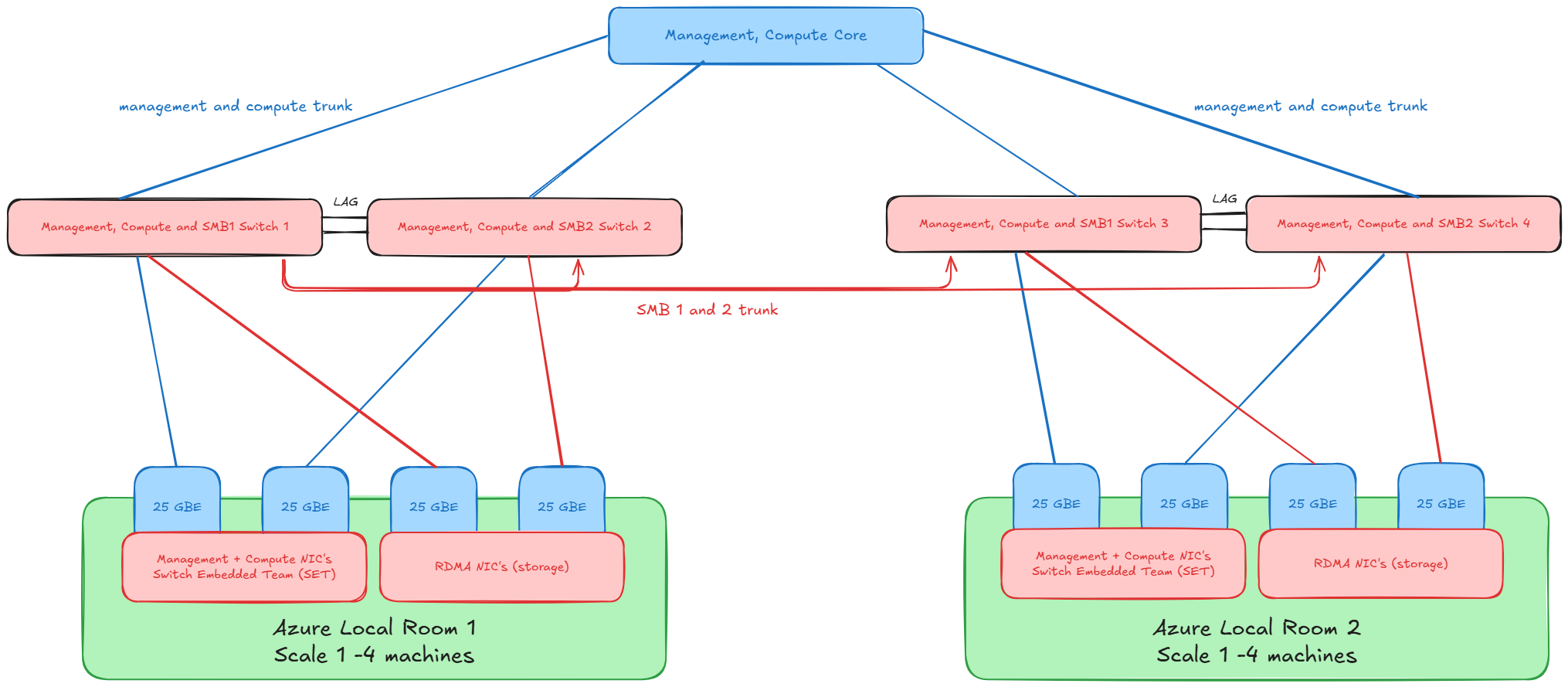
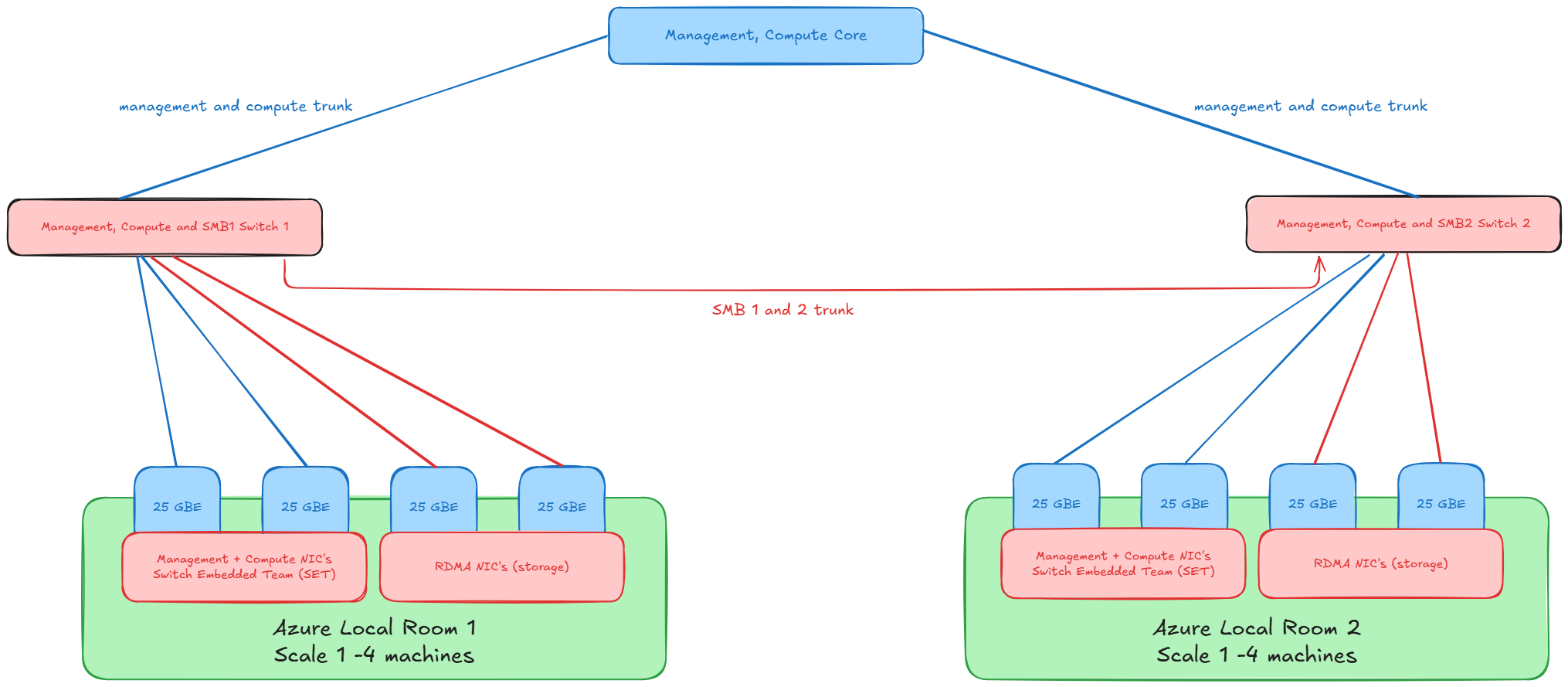
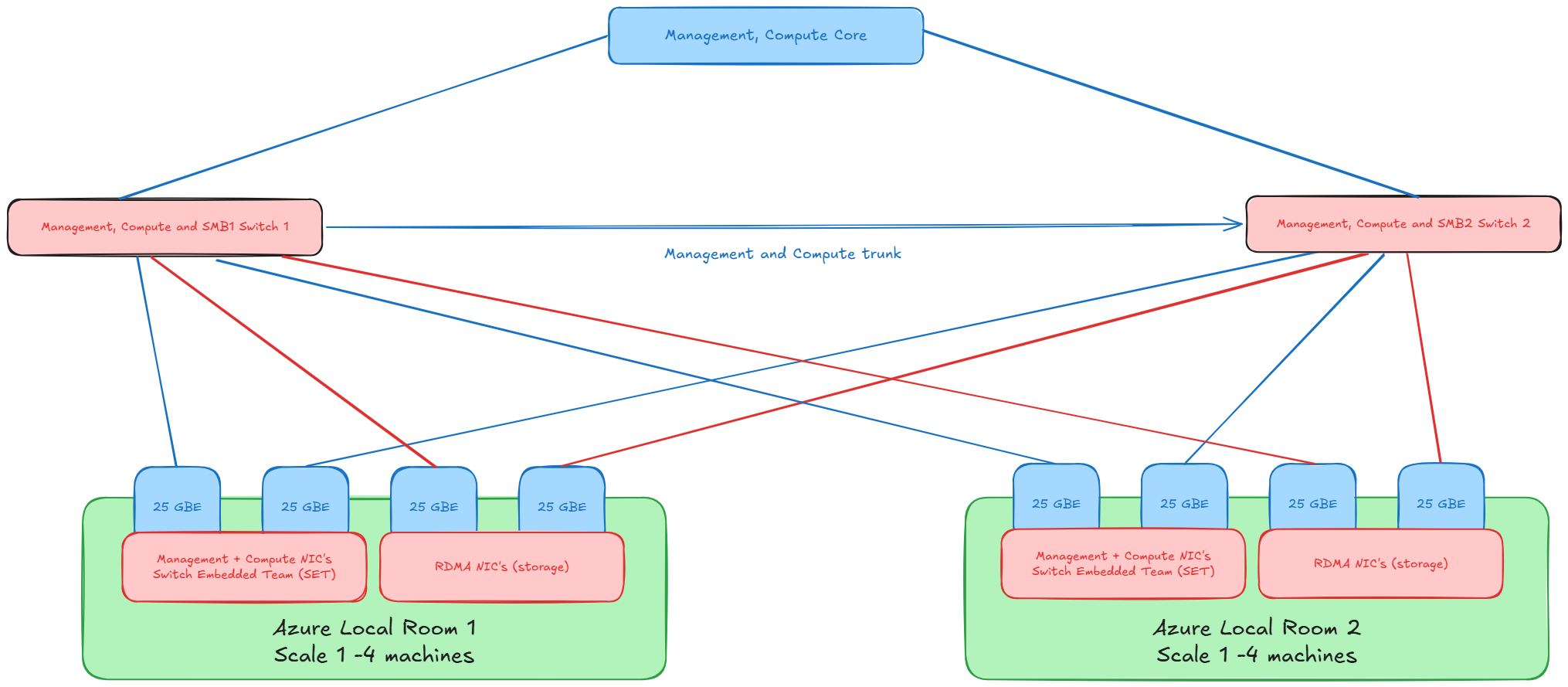
Fault Tolerance Reference
Based on Microsoft Azure Local Rack-Aware Cluster Requirements
| Configuration | Total Nodes | Mirror Type | Usable Capacity | Fault Tolerance |
|---|---|---|---|---|
| 1+1 | 2 | 2-way Mirror | 50% | Single fault (drive, node, or rack) |
| 2+2 | 4 | 4-way Mirror | 25% | Three faults (drive or node). If one rack fails, the remaining can sustain one fault of drive or node. |
| 3+3 | 6 | 4-way Mirror | 25% | Three faults (drive or node). If one rack fails, the remaining can sustain one fault of drive or node. |
| 4+4 | 8 | 4-way Mirror | 25% | Three faults (drive or node). If one rack fails, the remaining can sustain one fault of drive or node. |
Total Bandwidth Required
| Configuration | Total Nodes | Per Zone | Total |
|---|---|---|---|
| 1+1 | 2 | 50 Gbit | 100 Gbit |
| 2+2 | 4 | 100 Gbit | 200 Gbit |
| 3+3 | 6 | 150 Gbit | 300 Gbit |
| 4+4 | 8 | 200 Gbit | 400 Gbit |